
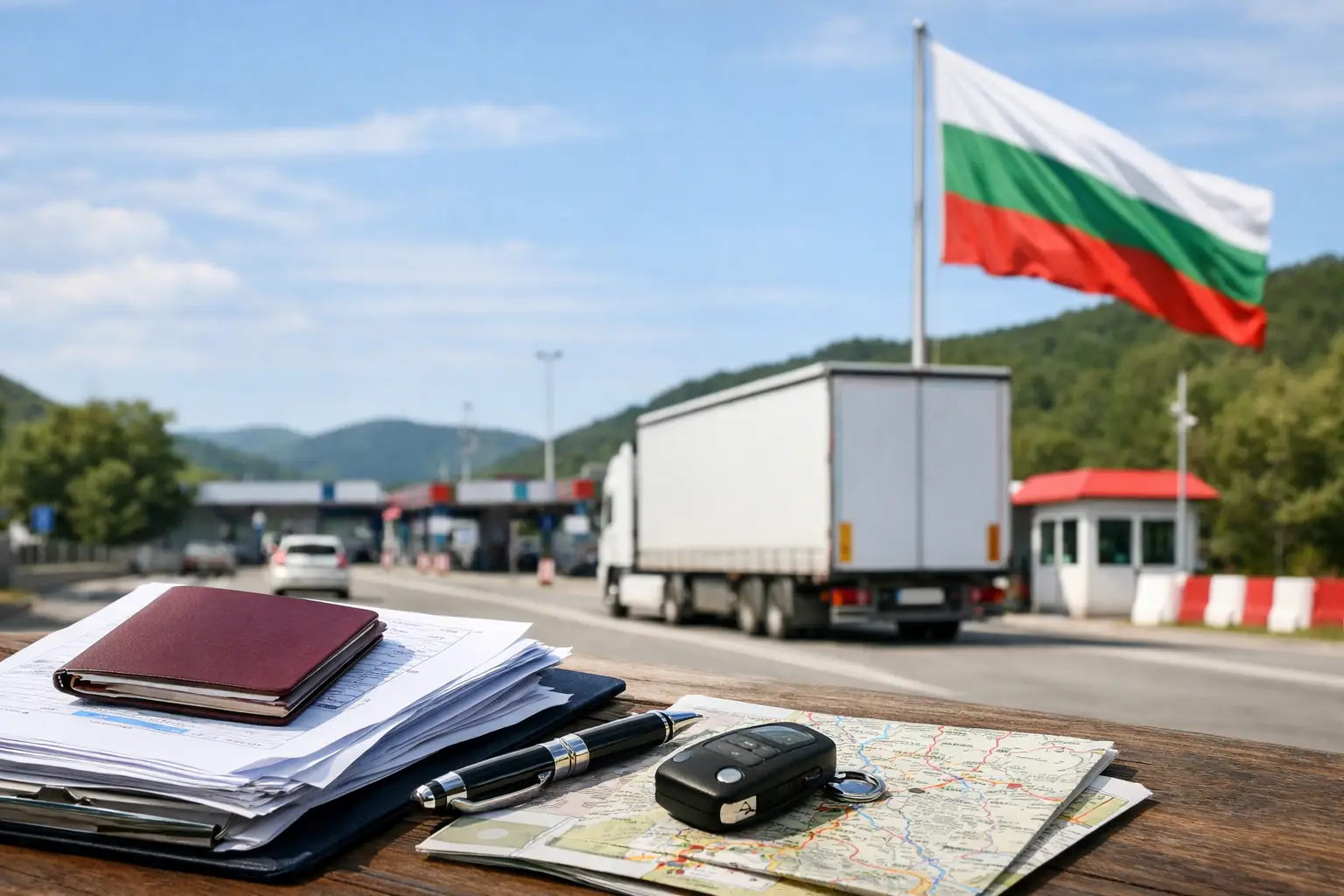
A pre-booked car can be ready at your hotel door at 5am, but it cannot solve a missing passport at the border. If you are asking what documents for border transfers you need, the answer depends on your nationality, destination and who is travelling with you. A few minutes of checking before departure protects a flight connection, business meeting or family holiday from an expensive delay.
For transfers starting in Bulgaria, document checks are usually most relevant on routes to Turkey, Serbia and North Macedonia. Bulgaria is part of the Schengen area, so journeys to Greece and Romania do not normally involve routine internal border controls. However, travellers must still carry valid identification and travel documents. Police or other authorities may carry out checks away from the border.
What documents for border transfers should passengers carry?
Your passport is the essential document for most international transfers. It should be the original physical document, valid for the whole journey and in good condition. A photograph on your mobile phone, a photocopy or a driving licence is not a replacement for a passport when a border authority requires one.
Before travelling, check the entry rules for the country you are entering and your own nationality. Some visitors may need a visa, an electronic travel authorisation or evidence linked to their stay. A visa that was valid for an earlier trip is not automatically suitable for a new entry, particularly where the number of permitted entries has been used.
For British passport holders, passport validity rules can differ between destinations. Many countries require several months of remaining validity, while others apply different rules according to whether you are a visitor, resident or transit passenger. Check the current official advice for every country on your route, not only the final destination. Rules can change with little notice.
If you hold a Bulgarian, EU or other residence permit, take it with you alongside your passport. A residence card may help demonstrate your right to return or stay, but it is generally not a substitute for a travel document. Keep both documents accessible rather than packed deep inside a large suitcase.
Visas, entry permissions and proof of travel
Where a visa or entry authorisation is required, carry the relevant confirmation in the format requested by the destination. Some approvals are electronic, but keeping a printed copy can still be useful if your mobile phone battery is low or mobile data is unavailable. Border officers may also ask questions about where you will stay, why you are travelling and when you plan to leave.
Depending on the destination and your personal circumstances, it is sensible to have your accommodation confirmation, return or onward travel details, and travel insurance information available. These are not requested from every passenger, but having them ready avoids searching through emails at the checkpoint.
Do not assume that a short transfer means fewer rules. A same-day trip from Sofia to Skopje, for example, is still an international journey. The same applies if you intend to cross into Turkey for a meeting and return to Bulgaria later that evening.
Travelling with children across a border
Every child needs their own valid passport or travel document. Do not rely on a parent’s passport containing old child details, as this is no longer accepted for international travel.
When a child travels with one parent, grandparents, friends or another adult, additional consent documents may be required or strongly recommended. The rules vary by country and by the child’s nationality. A signed parental consent letter, copies of the absent parent’s identity document and evidence of the relationship can help clarify the situation if questions arise.
Families with different surnames should also consider carrying supporting documents, such as a birth certificate or marriage certificate copy. This is particularly helpful where one adult’s surname does not match the child’s. It does not mean you will be stopped, but it gives border officials a clear answer if they need to confirm who is responsible for the child.
For a stress-free departure, keep the family’s documents together in a travel wallet that stays with an adult passenger. Child seats, luggage space and suitable vehicle size can be arranged in advance for a private transfer, but border documentation remains the responsibility of the traveller or parent.
Documents for your transfer vehicle
Passengers normally do not need to arrange vehicle paperwork when travelling with a professional private transfer provider. The operator should ensure that the vehicle is properly registered, insured and authorised for the journey, with the required documents available to the driver.
This matters more than many travellers realise. Cross-border passenger transport may involve checks of the vehicle registration, insurance, driver documentation and the operator’s authority to carry passengers internationally. A legitimate provider plans for these requirements before collecting you.
If you are travelling in your own car, hired car or company vehicle, the position is different. You may need the original vehicle registration document, suitable motor insurance for every country visited, and written permission from the owner or hire company to cross the border. A standard hire agreement does not always permit international travel. Check this before accepting the keys, not when you reach the checkpoint.
For business travellers, a company-owned vehicle can require an authorisation letter showing that the driver has permission to take it abroad. If you are carrying commercial goods, samples or equipment, customs paperwork may also apply. Passenger transfers and freight transport are treated differently, so be clear about the purpose of the journey.
Customs: documents are not the only consideration
A valid passport does not remove customs rules. Tobacco, alcohol, cash, medicines and certain food products can be subject to restrictions or declarations, especially when crossing between the EU and non-EU countries.
If you carry prescription medication, keep it in its original packaging and bring a copy of the prescription or a doctor’s letter where appropriate. This is particularly sensible for controlled medicines or quantities that could appear unusual for personal use. Do not place essential medication in luggage that is difficult to reach during a check.
Travellers carrying large amounts of cash should check declaration requirements in advance. These rules can apply when entering or leaving the EU and may apply again at the national border. Declaring cash where required is a legal obligation, not an optional formality.
Border officers have discretion to ask further questions or inspect luggage. Be honest, patient and clear about your destination. Arguments at a checkpoint rarely make a transfer faster.
Plan the timing around the border, not just the distance
A map may show a straightforward route, yet border waiting times can vary significantly. Holiday weekends, summer traffic, major events and additional security checks can all add time. This is especially relevant for transfers between Bulgaria and Turkey, where queues can be longer at busy periods.
Give your driver accurate collection and drop-off addresses, the number of passengers, luggage details and any flight or appointment deadline. Tell the transfer company in advance if anyone is travelling with a non-EU passport, has reduced mobility, needs a child seat or is carrying bulky items. It helps the journey be planned with the right vehicle and realistic timing.
At the border, follow the driver’s instructions about when to leave the vehicle, where to present passports and whether luggage needs to be opened. In some cases passengers stay in the vehicle while documents are checked; in others, everyone must attend the passport control window. Procedures are set by the authorities and may change on the day.
A simple check before you book
Before confirming an international transfer, check four things: that every passenger has an original valid passport, that required visas or permissions are in place, that children have any necessary consent paperwork, and that you understand customs restrictions for the route. Then allow extra time, particularly for a flight, cruise departure or fixed business appointment.
A professional driver can provide reliable transport, help with luggage and plan a sensible route, but no transport provider can guarantee admission to another country. The final decision always rests with border authorities.
When you book a cross-border journey with Truedrivers, share your route, travel date and passenger details clearly, and raise any uncertainty before collection. Contact us 24/7 with the practical details of your trip. The best border transfer is the one where your documents are ready, your vehicle is waiting and the only thing left to do is enjoy the journey.