
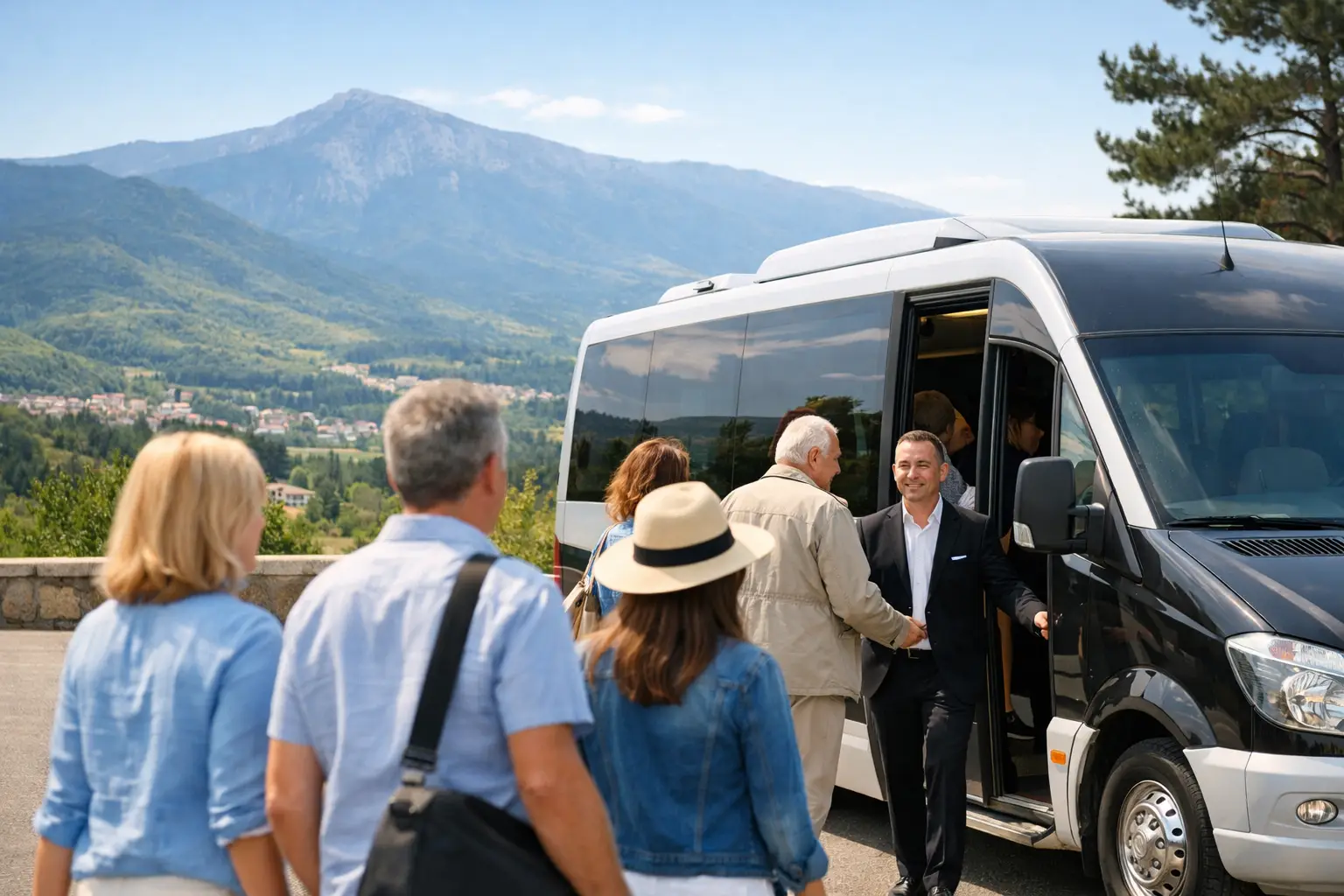
A group landing at Sofia Airport at 23:40, a family travelling with ski luggage to Bansko, or colleagues heading to a meeting in Plovdiv all face the same problem: getting everyone moving together without waiting, splitting up or arguing over directions. Pre-booked group transport turns a complicated arrival or journey into one clear plan, with the right vehicle, a confirmed collection time and a professional driver ready for the route.
For groups travelling in Bulgaria, transport is rarely only about the number of seats. Luggage, child seats, flight delays, hotel access, journey length and the need to stay on schedule matter just as much. Choosing the right service before you travel gives everyone a calmer start.
Why group transport needs planning
Public transport can work well for a solo traveller with time to spare. It is less practical when several people are carrying cases, arriving late, travelling with children or trying to reach a smaller resort, venue or business address. A group may also arrive on different flights, need several collection points or have a return journey at an inconvenient hour.
Booking one organised transfer keeps the party together and gives one person a clear point of contact. Rather than relying on taxis being available outside a terminal or station, you know the vehicle capacity, meeting arrangement and destination in advance. That certainty is particularly valuable after a long flight or during winter travel, when road conditions and daylight can affect journey times.
There is a trade-off. A larger private vehicle may cost more upfront than individual public transport tickets. However, the total can be better value once you account for multiple taxis, luggage supplements, extra waiting time and the difficulty of coordinating several separate journeys. For business groups, staying together can also mean arriving prepared rather than fragmented and delayed.
Choose the vehicle around people and luggage
The most common booking mistake is choosing a vehicle based only on passenger numbers. A seven-seat vehicle may be suitable for five or six people with light bags, but it may not be appropriate for the same number of passengers travelling with large suitcases, pushchairs, ski equipment or presentation materials.
A good transport provider will ask about both passengers and luggage before confirming the booking. This is not unnecessary detail. It prevents an uncomfortable collection, protects safety and makes sure nobody has to hold bags on their lap for a long intercity journey.
Small groups and families
For couples, families and small groups, a comfortable car or people carrier is often the most practical choice. It offers direct travel, space for normal holiday luggage and a more relaxed experience than changing between buses or trains.
If you are travelling with children, arrange child seats when you book. Confirm each child’s age and approximate size so the appropriate seat can be prepared. This is especially useful for airport collections, where finding suitable equipment after landing is not realistic.
Medium-sized parties
Groups attending a wedding, ski break, conference or guided tour often need a minibus. This keeps friends, colleagues or relatives in one vehicle while allowing sensible space for luggage. For a journey between Sofia and Bansko, Plovdiv, Borovets, Pamporovo or another destination, the ability to travel together changes the tone of the trip. People can talk, rest and make plans rather than trying to reunite at every stop.
Large groups and events
For larger parties, a coach or bus is usually the sensible option. This may include airport groups, corporate delegations, school and university trips, sports teams, cruise passengers or organised excursions. The vehicle choice should take account of the route as well as capacity. Some city-centre streets, mountain hotels and rural properties have limited access, so the pick-up or drop-off point may need to be agreed in advance.
Give clear journey details before booking
A reliable group transfer starts with accurate information. Provide the date, collection time, starting point, destination, number of passengers and amount of luggage. For airport transfers, include the flight number. It allows the driver or operations team to monitor the expected arrival and adjust to ordinary flight changes where possible.
Also mention details that may affect the journey: a late-night arrival, mobility needs, child seats, multiple hotel stops, oversized equipment, a ferry connection or a fixed event start time. A provider cannot plan around information it does not have, and a few clear notes at the booking stage can prevent avoidable delays.
If your group is arriving on more than one flight, decide whether everyone should wait for the final arrival or whether separate transfers are more practical. There is no universal answer. One vehicle may be best for a group with close arrival times, while separate collections can be more comfortable if the gap is several hours.
Build realistic time into airport and intercity travel
Punctuality matters, but realistic timings matter too. International arrivals involve passport control, baggage reclaim and sometimes delayed luggage. A group naturally takes longer to gather, use facilities and leave the terminal than one traveller. Allow time for this when setting expectations for hotel check-in, dinner reservations or onward meetings.
For longer routes, consider comfort breaks and seasonal conditions. Bulgaria’s mountain routes can take longer in snow, heavy rain or busy holiday periods. A professional driver will select an appropriate route, but no service can remove weather or traffic entirely. Booking with a sensible time buffer is the best way to reduce pressure.
Early-morning departures deserve the same care. If your flight leaves Sofia Airport at dawn, arrange collection based on the time you need to be at the terminal, not simply the flight departure time. The same principle applies to business appointments in Varna, Burgas, Stara Zagora and other cities where arriving ten minutes late may affect the whole schedule.
What dependable group transport should include
The quality of group transport is felt in the details. A clean, maintained vehicle, a courteous driver and clear communication should be standard. So should a confirmed itinerary that states where you will be collected and how to contact support if plans change.
Look for a service that can support you 24/7, particularly if you are travelling outside normal hours. Late flights, urgent changes and early departures do not follow office opening times. Fast, direct communication gives organisers confidence that there is someone available when they need help.
It is also worth checking whether the provider has a fleet broad enough to match the group. A company offering cars, minibuses and larger buses can recommend the practical option rather than trying to fit every booking into the same vehicle type. Truedrivers provides pre-booked transport across Bulgaria for groups of different sizes, with professional drivers and straightforward support from enquiry to arrival.
Make one person responsible for the travel plan
Every group benefits from a named organiser, even if the booking is made for a relaxed holiday. This person does not need to manage every detail during the journey. Their role is simply to keep the essential information in one place: booking confirmation, driver contact details, flight numbers, final passenger count and destination address.
Send the collection details to the whole group before travel. Remind everyone which exit or meeting point to use, what vehicle information to expect and what to do if they are delayed. This is particularly helpful for groups of colleagues who do not know one another well, or family members travelling from different parts of the airport.
For return transport, confirm the collection time while you are still at the destination. Hotel receptions, event venues and private accommodation can have different vehicle access arrangements, so make sure the driver can reach the correct entrance. If the group has changed in size or acquired extra luggage during the trip, raise it early.
A better way to start and finish the journey
The best group journeys do not begin with a queue for taxis or a search for space on public transport. They begin with a vehicle that fits the group, a driver who knows the route and a plan that accounts for real travel conditions. Whether you are travelling for a holiday, a family occasion or an important meeting, arranging the details in advance leaves your group free to focus on the reason for the trip.