
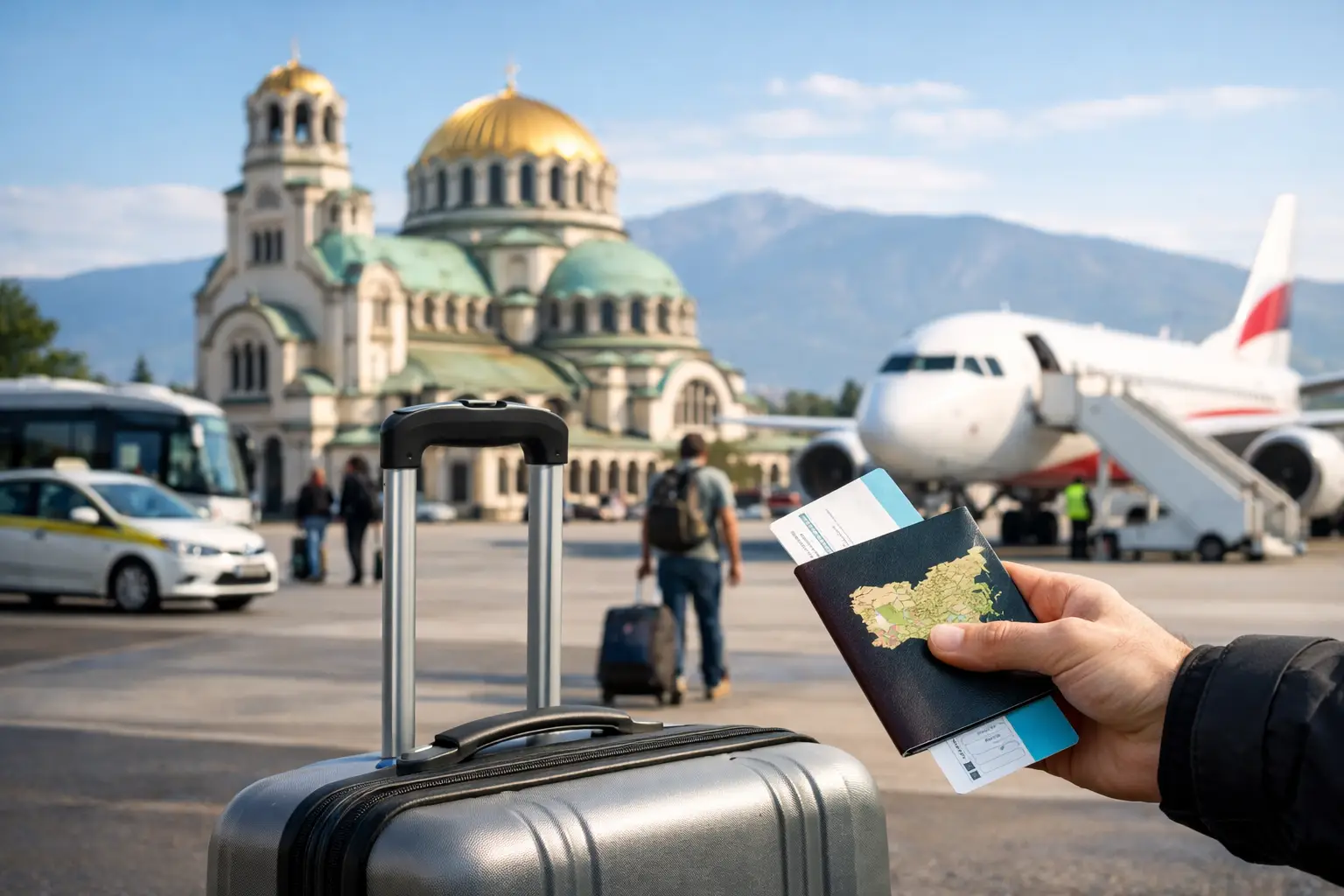
A late flight into Sofia, a tired child, two large suitcases and a hotel several hours away is not the moment to work out local transport. This Bulgaria arrival transport guide explains what to expect after landing and how to choose the right onward journey, whether you are arriving for a holiday, a business meeting or a family visit.
Bulgaria is straightforward to travel around once you are on the road, but arrival plans deserve a little thought. Airports, public transport timetables, taxi ranks and long-distance routes all work differently. The best choice depends on your landing time, destination, luggage, group size and how much certainty you need.
Start with your arrival airport and final destination
Most international visitors arrive through Sofia Airport, while Burgas and Varna are key gateways for the Black Sea coast. Plovdiv Airport has a more limited schedule but can be convenient for selected flights. Before choosing transport, check not only where you land but where you need to be that evening.
Sofia Airport is close to the capital, and central Sofia can be reached relatively quickly. However, a journey to Borovets, Bansko, Plovdiv, Veliko Tarnovo, Stara Zagora or the coast is a different proposition. A low-cost flight arriving in Sofia may still leave you with a two, four or even six-hour road journey.
Burgas and Varna are well placed for resorts and coastal towns, but many hotels are outside the city centre. Sunny Beach, Nessebar, Sozopol, Golden Sands, Albena and Balchik all require onward transport. If you are arriving outside the main summer season, services can be less frequent, so checking the full door-to-door journey matters.
Your Bulgaria arrival transport options
There is no single best option for every traveller. The right choice is usually the one that gives you a realistic arrival time, enough space for your luggage and clear arrangements if your flight is delayed.
Pre-booked private transfer
A pre-booked private transfer is often the most practical option for families, business travellers, groups and anyone travelling beyond the airport city. Your driver is arranged in advance, the vehicle is selected for your party and luggage, and you travel directly to your accommodation, office or next destination.
This is especially useful for late-night arrivals, early departures and unfamiliar routes. Rather than joining a queue or negotiating after a flight, you know who is collecting you and where you are going. A professional transfer provider should confirm the collection details, monitor practical changes to the journey and provide a contact route if you need assistance.
For a family, ask for child seats when booking and state each child’s age. For a group, give an honest luggage count. Six adults with ski cases or large holiday bags may need more than a standard people carrier. Choosing the right vehicle before arrival is far easier than trying to solve a space problem at the kerbside.
Official airport taxis
Taxis can suit short journeys, particularly if you are heading into Sofia, Varna or Burgas and travelling light. Use the official taxi point and check the displayed information before getting in. A legitimate taxi should have visible company details and pricing information.
The trade-off is certainty. At busy times there may be a wait, and a taxi at the airport is not always the most suitable choice for an intercity trip, specialist luggage or a larger group. If you need a fixed plan for a long route, booking ahead is normally the calmer option.
Public transport and intercity buses
Sofia Airport has a metro connection, which can be a cost-effective choice for central areas when you arrive during operating hours and have manageable luggage. Local buses may also help for particular districts. In Varna and Burgas, local transport can work well for city-based stays.
For onward travel, Bulgaria has intercity buses and trains connecting major towns. They are worth considering for flexible solo travellers on a budget. But public transport requires extra time: you may need to reach a bus or railway station first, wait for the next departure and manage bags between connections.
It is less appealing after a delayed flight, with young children, or when arriving late. Timetables can also change by season and route. Treat public transport as a planned choice rather than an assumption that there will be a convenient service waiting outside the terminal.
Hiring a car
A hire car gives independence, particularly for travellers planning to visit rural areas, mountain villages or several towns. It can make sense for a longer holiday where you expect to drive most days.
On the other hand, you need to be comfortable with unfamiliar roads, parking, local driving conditions and any winter requirements. Sofia city traffic and hotel parking can be frustrating, while a car left unused for several days is an unnecessary expense. For a one-way airport-to-hotel journey or a business visit with a fixed schedule, a driver is often simpler.
What to arrange before you fly
The most useful arrival information is simple, but it prevents avoidable confusion. Have your flight number, landing date, airline and scheduled arrival time ready. Share the full destination address, not only the hotel or flat name. In larger resorts, properties with similar names can be several kilometres apart.
Tell your transport provider how many passengers are travelling, including children, and how much luggage you have. Mention pushchairs, golf bags, bicycles, skis, musical instruments or mobility equipment. These details affect the vehicle choice.
Also confirm how you will recognise your driver. A meeting point inside the terminal or just outside should be clearly agreed. Keep your booking confirmation and contact number available on your phone, but save important details offline too. Mobile signal, battery life and airport Wi-Fi are not guarantees after a long flight.
If your flight is delayed, communicate as soon as you can. With a pre-booked airport transfer, flight details make it easier for the provider to understand the situation and adjust collection arrangements where possible. Do not assume that a driver can identify every change without the correct flight information.
Planning for Sofia Airport arrivals
Sofia is Bulgaria’s busiest airport and a common starting point for journeys nationwide. The airport is divided into terminals, so always check your arrival terminal and your collection instructions. Do not simply walk out and hope your transport is waiting at the same place as another passenger’s.
For central Sofia, the metro or a taxi may be perfectly suitable during the day. For journeys to ski resorts, provincial cities, border crossings or rural accommodation, pre-arranged transport has a stronger advantage. It removes the extra city-centre transfer and starts the long journey while everyone is still together.
Winter visitors should allow extra time for mountain routes. Roads to Bansko, Borovets and Pamporovo are regularly travelled, but weather can affect journey duration. A vehicle equipped for conditions and a driver familiar with the route are more valuable than an optimistic timetable.
Arriving at Burgas or Varna
Coastal flights often arrive with travellers who have booked a package holiday, a private villa or a resort flat. If your accommodation is in Burgas or Varna itself, your onward trip is usually short. If you are travelling along the coast, confirm the exact town and property location before booking.
Summer traffic can extend transfer times, particularly around resort changeover days and peak afternoon arrivals. A direct transfer avoids the need to carry luggage through bus stations or make several local connections. Outside summer, do not rely on seasonal shuttle services being available at the time you land.
For groups, a minibus or coach can also be more practical than splitting into multiple taxis. Everyone arrives together, luggage is planned for and there is one clear point of contact if the flight schedule changes.
Safety, payment and practical expectations
Choose transport based on more than the lowest advertised price. A reliable service should use maintained vehicles, licensed professional drivers and clear booking details. Ask whether the quoted journey is private, whether waiting time is covered after a flight delay, and how changes are handled.
Be cautious with unsolicited offers inside or outside the terminal. If someone approaches you with an unclear price or pressures you to leave immediately, it is reasonable to decline. Confirm the vehicle registration, driver name or agreed meeting sign when using a pre-booked service.
Bulgaria uses the lev, although card payments are widely accepted in many places. Keep a small amount of local currency for incidental expenses, but do not feel obliged to make rushed payment decisions at the airport. For any transfer, understand the payment method and price before travel begins.
A better arrival begins before take-off
The most dependable journeys are arranged while you still have time to compare options and share the right details. For a short city break, public transport or an official taxi may be enough. For a late landing, a long-distance route, children, heavy luggage or a fixed business schedule, a private transfer gives you a clear plan from terminal to door.
Truedrivers can arrange pre-booked transport across Bulgaria for individuals, families and groups, with vehicle options for airport collection, intercity travel and larger parties. Send your flight and destination details before you travel, then land knowing the next part of the journey is already organised.