
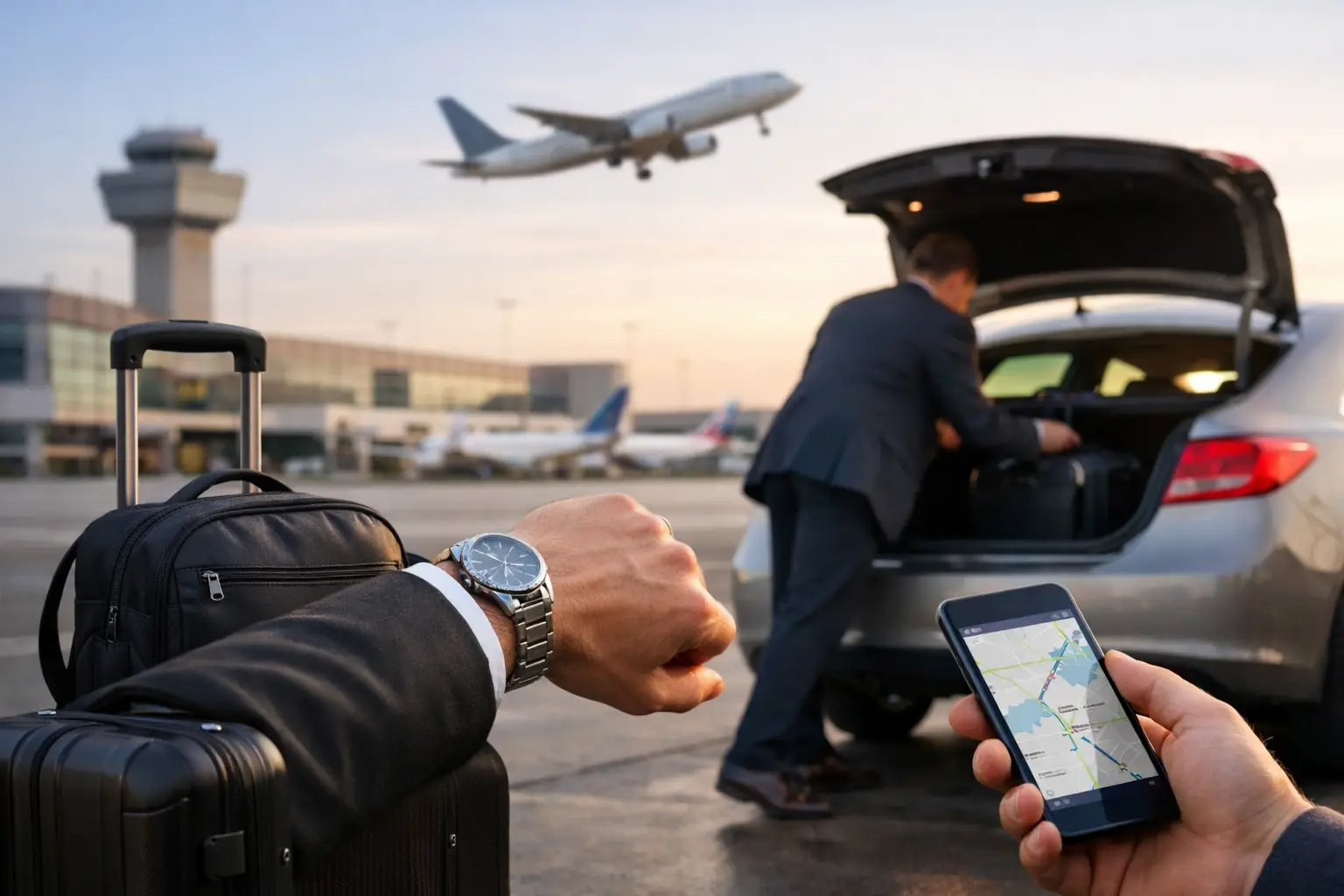
Missing a flight rarely happens because the journey looked difficult on paper. It usually happens because one small part of the plan failed – the taxi did not arrive, the train was delayed, the car park transfer took longer than expected, or travelling with children and luggage added more time than anyone allowed for. That is why the best ways to reach airport terminals are not just about cost. They are about certainty, timing and how much stress you are willing to carry before you even check in.
For some travellers, the cheapest option is good enough. For others, especially when travelling early in the morning, late at night, with family, or on a work schedule, reliability matters more than shaving a few pounds off the journey. The right choice depends on your route, your luggage, your flight time and how much room there is for error.
Best ways to reach airport terminals without last-minute stress
The simplest way to choose is to think beyond the journey itself. Ask what happens if your transport is late, cancelled or full. An airport journey is different from a normal city trip because the deadline is fixed. You cannot simply arrive a bit later and carry on.
Private airport transfer is often the most dependable option for travellers who want the least friction. A pre-booked driver gives you a confirmed pick-up time, direct travel, help with luggage and a clear plan from door to terminal. This matters even more in unfamiliar areas, during night travel and when public transport connections are limited. In Bulgaria, for example, routes to and from Sofia, Plovdiv, Varna or Burgas can be straightforward with the right driver but awkward if you are trying to coordinate several stages yourself.
Standard taxis can work well for shorter urban journeys, but quality varies. If you book at the last minute or take a taxi from a rank, you may not know exactly what vehicle will arrive, whether there is space for all passengers and cases, or how easy it will be to get one during peak periods. For solo travellers with light luggage and flexible timing, that may be acceptable. For families or business travellers, it is often not ideal.
Trains and airport coaches can be cost-effective, especially if your city has a direct route. The drawback is that they only feel easy when the timetable lines up neatly with your flight. If you need to leave home very early, change services, carry several bags or travel from outside the main urban area, the value starts to look less convincing. One delayed service can suddenly make the whole journey feel fragile.
Driving yourself can seem convenient because you stay in control, but airport parking introduces its own pressures. You need to plan for traffic, fuel, parking availability, shuttle buses, walking time and the possibility of delays getting from the car park to departures. It can still be the right choice for longer trips from rural areas or when public transport is poor, but it is not always the simplest option it appears to be.
How to choose the best way to reach airport for your trip
Your flight time is the first thing to consider. Early departures and late arrivals narrow your options quickly. Public transport may be limited or unavailable, and local taxis can be harder to secure. In these cases, a pre-booked transfer is usually the safer decision because the timing is fixed in advance and support is available if plans change.
Luggage changes the calculation as well. A backpack and cabin case are manageable on a train. Two large suitcases, hand luggage, a pushchair and child seats are not. The more items you carry, the more valuable direct transport becomes. What looks cheap at first can become exhausting when you are lifting bags up steps, changing platforms or waiting in bad weather.
Group size matters too. A couple might split the cost of a taxi comfortably, while a family of five or a business group can often find better value in a pre-arranged larger vehicle. This is especially true when everyone is travelling together and needs to arrive at the same terminal at the same time. It is not only about comfort. It avoids the risk of one car arriving later than another or part of the group being left to improvise.
Then there is the purpose of the trip. If you are heading on holiday, a small delay may be frustrating but manageable if you build in time. If you are flying for work, attending an event or meeting a connection, the cost of being late is far higher than the fare difference between transport options.
When private airport transfer makes the most sense
Private transfer is usually the strongest option when reliability comes first. It suits travellers arriving or departing at unsociable hours, people unfamiliar with the local area, families who need child seats, and anyone who wants a direct journey with minimal handling of luggage.
It is also particularly useful for airport runs that begin outside city centres. Many travellers assume they can piece together buses, trains and local taxis, but that approach often works only when every link runs on time. A pre-booked service removes those weak points. You know who is collecting you, when they are arriving and what vehicle has been arranged.
For visitors in Bulgaria, this can be the difference between a smooth transfer and a confusing one. If you are travelling between cities or from a resort, hotel or private address to the airport, a structured service is often more practical than hoping local connections align. Companies such as Truedrivers focus on that certainty, which is why this type of service appeals to families, expatriates and business travellers who do not want guesswork on departure day.
When train, coach or metro can be the right call
Public transport is worth considering when your route is direct, frequent and predictable. If you are staying near a main station, travelling with light luggage and flying at a sensible hour, train or coach can be efficient and affordable. In some cities, rail links to the airport are excellent.
The trade-off is flexibility. You are tied to a timetable, and if your service is cancelled or delayed, recovery options may be limited. Public transport can also be tiring after a long-haul flight, especially if you then need another bus or taxi to reach your final destination.
When driving yourself is still practical
Self-drive works best for travellers who live far from transport links, already know the airport layout and are comfortable with parking arrangements. It can also suit longer family trips if parking costs are reasonable and you prefer to keep your own schedule.
But the hidden time costs are real. You may save on the fare compared with a private transfer, yet lose that benefit through parking charges, fuel and the extra buffer needed for traffic and shuttle transfers. If you are returning late or after a tiring flight, collecting the car and driving home may feel like the hardest part of the journey.
Common mistakes when planning how to reach the airport
The biggest mistake is planning for the ideal day instead of the real one. Roads get congested, lifts break, children need extra time, queues form at drop-off points and weather slows everything down. Airport transport should have slack in it.
Another common problem is underestimating pick-up logistics. In blocks of flats, hotels, gated properties or busy city streets, a driver may need extra instructions or a better meeting point. If you are booking any transport, clear communication helps avoid delays before the journey has even begun.
People also forget to match the vehicle to the trip. A standard saloon may be fine for two passengers, but not for a family with several large cases. The same goes for group travel. It is better to book the right vehicle from the start than find out too late that baggage space is tight.
Finally, many travellers focus only on departure and ignore arrival. The best airport plan covers both directions. After a long flight, the difference between waiting in a queue and stepping into a pre-arranged car feels much bigger than it did when you booked.
The option that feels easiest is often the best one
There is no single answer for every traveller, which is why the best ways to reach airport terminals depend on timing, route and personal priorities. If your journey is simple, direct and flexible, public transport may do the job well. If you want full control and do not mind parking, driving can still work. But if your priority is punctuality, comfort and fewer moving parts, a pre-booked airport transfer is usually the most reliable choice.
The best airport journey is the one that lets you stop thinking about the journey at all and focus on where you are going next.